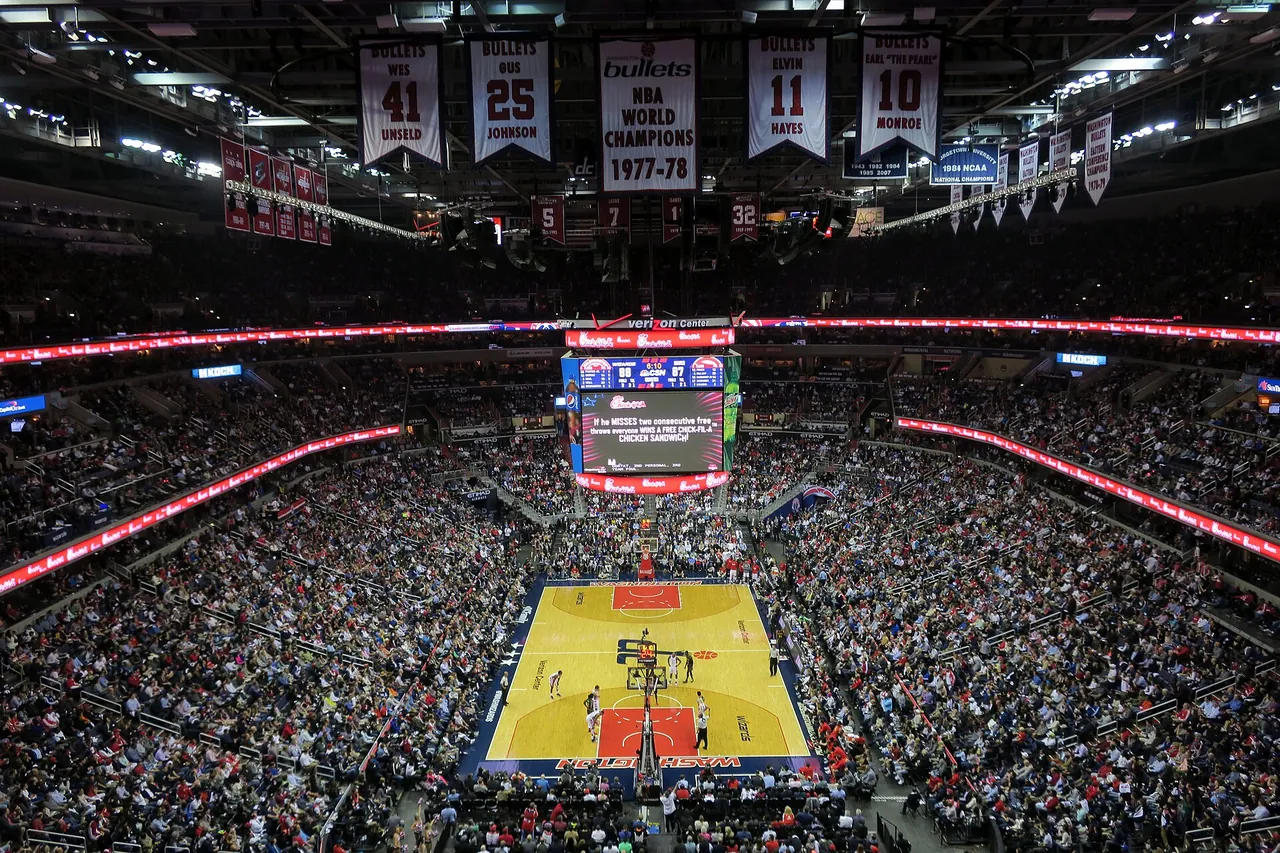

How do you become an NBA agent, and what are the requirements?
Short answer
To represent NBA players you must be certified by the National Basketball Players Association. That means a four-year degree or relevant negotiating experience the NBPA accepts in its place, a background investigation, a passing score on an in-person exam held each January in New York, a $750 application fee and $1,250 in prorated dues.
An NBA agent, also called a player agent or sports agent, is a person certified by the National Basketball Players Association to negotiate NBA and G League contracts on a player's behalf. If you are researching how to become an NBA agent, or how to become a sports agent in basketball more broadly, NBPA certification is the starting point for the men's professional game.
This is Part 1 of a four-part series on basketball agent certification. Part 2 covers the WNBA, Part 3 covers NCAA certification for college men's players and Part 4 covers FIBA and representing players overseas. The processes overlap, and the differences between them are where people get tripped up.
Who certifies NBA agents?
The National Basketball Players Association, the union for NBA players. The NBPA screens agents, monitors their contracts and enforces its Regulations Governing Player Agents, per the NBPA. No NBA team can negotiate a player contract with an uncertified agent.
NBPA certification covers NBA and G League players only. It does not cover college players weighing the draft or players signing overseas. Those require NCAA certification and a FIBA license, per the NBPA agent FAQ.
What are the requirements to become an NBA agent?
- Education. A degree from an accredited four-year college or university. The NBPA may, in its unreviewable discretion, accept relevant negotiating experience in place of any year of formal education, and that experience must be documented with the application.
- Background investigation. The NBPA verifies education, professional certificates, work experience, civil and criminal history and social media activity through an outside screening firm.
- The exam. Passing is required. It covers the NBPA Regulations and the 2023 collective bargaining agreement, including the salary cap, exceptions, the rookie scale and trade rules.
- Fees. Paid electronically with the application. There are no payment plans or extensions.
International applicants may apply and sit for the exam. Notice what is not on the list: a law degree, a business degree, years in the industry or a sponsoring agency. Those help people do the job. They are not the requirement.
What was the Rich Paul rule, and what did it change?
In August 2019, the NCAA issued new rules for agents representing college players testing the NBA draft. The list included a bachelor's degree, three consecutive years of NBPA certification, professional liability insurance and an in-person exam in Indianapolis, per ESPN.
The degree requirement was quickly labeled the Rich Paul rule, because Paul, one of the league's most prominent agents, does not hold a college degree. He argued in an op-ed that a four-year degree requirement shuts out people from communities where college is not realistic, and does little to separate ethical agents from bad ones.
A week later, on August 12, 2019, the NCAA amended the rule. Agents without a bachelor's degree could qualify if they were certified and in good standing with the NBPA, because the NBPA had already granted degree waivers to agents it judged qualified, per Yahoo Sports.
- The NBPA's judgment became the standard. If the union accepts your negotiating experience in place of a degree, the NCAA honors that decision.
- The degree rule itself did not disappear. The NBPA still lists a four-year degree as the default. The experience substitution is discretionary, not automatic.
- Both sides had a point. A degree is an easy screen to verify. It is also a poor measure of ethics or negotiating skill, and the union that represents the players is the body best placed to judge experience.
How does NBPA agent certification work step by step?
The NBPA lists seven steps, per its agent FAQ:
- Submit the online application with proof of education and the $750 fee.
- Receive access to study materials, including a CBA prep course provided through the NBPA's partner, Sports Business Classroom.
- Complete the background investigation.
- Receive approval to sit for the exam.
- Study the Regulations and the CBA. The NBPA holds a virtual review of the Regulations but no CBA review session.
- Sit for the NBPA agent exam in person in New York City in January. It is offered once a year.
- Receive results within about 30 days, pay $1,250 in prorated dues, and receive the certification package.
The 2026-27 application window opened September 22, 2026 and closes October 30, 2026. Anyone who holds out as an agent before passing the exam risks denial.
| Rule | NBA (NBPA) | WNBA (WNBPA) | College (NCAA) | Overseas (FIBA) |
|---|---|---|---|---|
| Who it covers | NBA and G League players | WNBA players | D-I men's players testing the draft | International transfers |
| Education | 4-year degree, or negotiating experience | 4-year degree, or negotiating or business experience | Degree, or an NBPA waiver | None listed; good standing |
| Prerequisite | None | None | 3 straight years NBPA certified | Passport and criminal record check |
| Exam | In person, NYC, each January | None unless instituted | Exam or continuing education | Interview and 45-minute test; NBPA, WNBPA and bar members exempt |
| Window | Sept 22 to Oct 30, 2026 | Rolling; decision in 30 days | Aug 1 to Sept 30 | Test sessions in Switzerland, the Americas and Asia |
| Entry cost | $750, then $1,250 dues | Set by the union | $250, then a certification fee | CHF 250 test fee |
| Ongoing | $2,500 to $7,500 by July 1 | Annual fees by Jan 1 | Reapply every year | CHF 1,000 a year |
| Fee cap | 4%; 2% on minimum deals | 5% | Not set by the NCAA | 10% |
Do you need to buy a prep course for the NBPA agent exam?
For most applicants, no. A prep course comes with the certification process. The NBPA partners with Sports Business Classroom, and every approved exam taker gets access to its full CBA course, led by Bobby Marks and Eric Pincus. The program had supported more than 230 prospective agents by December 2025, per HallPass Media. The NBPA adds a virtual review of the Regulations, a list of the CBA sections the exam covers and sample questions, per its agent FAQ.
The author received a prep course with his exam when he certified in 2023, and it covered what the exam tested. That is why MM3 Sports does not sell an exam course. The fee you already pay includes one, and buying the same material a second time is a cost most prospective agents do not need.
- When a paid tutor can make sense. An applicant who failed a prior attempt, or who wants live one-on-one coaching and timed mock exams, may get value from a third-party course. That is a preference, not a requirement.
- What matters more than any course. Hours with the CBA itself. Work the salary cap, exception and rookie-scale math until you can do it without the course open.
What does certification cost, and how much do NBA agents make?
Someone who applies in this window and passes the January 2027 exam pays $750 in October 2026, $1,250 in prorated dues after passing and $2,500 in full-season dues on July 1, 2027. That is $4,500 in NBPA fees by July 2027, before travel to New York and to a required May seminar. Dues then scale with the client list: $2,500 for up to nine players, $5,000 for 10 to 19 and $7,500 for 20 or more.
NBA agents are paid a percentage of the contracts they negotiate, and the NBPA caps that fee on playing contracts, per its 2025 Regulations:
- 4% of compensation for seasons above the league minimum. On a $10 million season, that is $400,000.
- 2% for seasons at the minimum, which covers many two-way and minimum deals.
- For first-round picks on the rookie scale, 4% only on pay above 80% of the scale amount, which keeps rookie fees small.
For how the top of the market works, see the Curry and LeBron contracts.
How do NBA agents get paid on endorsements?
Under a different rule. The NBPA's 4% cap applies to playing contracts. Fees on marketing and sponsorship deals are set by agreement between agent and player, and endorsement commissions commonly run 10% to 20%, per Chron. On a $1 million shoe deal, that is $100,000 to $200,000, against a $40,000 maximum on a $1 million playing salary.
The NBPA does not cap those fees, but it makes them visible. By May 1 each year, every agent must send each client, with a copy to the NBPA, a fee disclosure form that itemizes what the player paid for salary negotiations separately from marketing and sponsorship work, asset management and other advice, per the 2025 Regulations. Players can also request an audit of the agent's records.
- Where the money concentrates. National brand deals go mostly to stars, and large agencies run separate marketing divisions to chase them.
- Where newer agents start. Local and regional sponsors, camps, appearances and content partnerships. Smaller deals, but the same uncapped percentage, and they build a client's brand before the big offers arrive.
Do NBA agents need a surety bond or insurance?
Not from the NBPA. Its Regulations do not require agents to post a bond or carry insurance. Those requirements come from state law, which regulates anyone who recruits or signs student athletes. Georgia requires a $10,000 surety bond, Pennsylvania $20,000, Iowa $25,000, and Oklahoma and Texas $50,000, with Texas requiring $100,000 in some cases, including when the agent also provides financial services, per Surety Group. A bond typically costs 1% to 5% of its face amount a year, so a $50,000 bond starts around $500, per SuretyBonds.com.
California takes a different route. Its Miller-Ayala Act requires $100,000 in insurance or equivalent security, a public disclosure filing with the Secretary of State and a trust account for athlete funds, per Athlete Contact.
- Veteran-only practices may never trigger these laws. They are written for student athletes, so an agent who signs only players already in the NBA sits outside most of them.
- Draft recruiting triggers them. An agent who signs players coming out of college registers in the states where he or she recruits, and posts a bond where the state requires one.
- Insurance is worth pricing either way. A drafting error on a multi-year contract is expensive, and errors and omissions coverage costs far less than the exposure. NCAA certification requires professional liability insurance outright.
How many NBA agents are there compared with NBA players?
Very. A Forbes analysis in August 2025 counted 828 NBPA-certified agents and found that 78% had never negotiated an NBA player contract, while only 133, about 16%, had negotiated more than one, per Forbes. Many of those agents represent players in other leagues around the world.
Compare that with the jobs. Thirty teams with up to 15 standard and three two-way contracts each make about 540 roster spots, so there are roughly 1.5 certified agents for every NBA roster spot, and most players are already represented.
The clients are also concentrated. A December 2024 review of more than 600 players on 2024-25 rosters found that the six largest agencies represented about 59% of players, and smaller agencies and independent agents represented about 38%, per Booking Agent Info.
How competitive is signing NBA clients?
It is the hardest part of the job, and the rules shape how it is done. Agents cannot offer players or their families money or gifts to sign, and federal law bars gifts to college athletes before a contract is signed, as covered in who young players should trust. What remains is relationships, reputation and results.
- Large agencies offer depth: marketing departments, training and data staff, and relationships across every front office.
- Smaller firms and independent agents offer attention: fewer clients per agent and direct access to the person negotiating.
- Timing starts early. Relationships with prospects and families often begin in high school and college, well before a player can sign.
- The global pool is growing. NBA opening-night rosters for 2025-26 featured a record 135 international players from 43 countries, per the NBA. That is roughly one in four roster spots, and those players often build their representation while playing club basketball abroad, long before the draft.
Can an NBA agent represent coaches and front-office staff?
Yes, with limits. No union certifies coach agents, but the NBPA bars a certified agent from personally representing a team's president, general manager, head coach or any manager who helps set player pay or playing time. Coach representation is its own practice with its own negotiation demands, covered in full in can basketball agents represent coaches.
What are the pros and cons of representing NBA players?
The case for it:
- The biggest contracts in basketball. Even a capped 4% of one mid-level contract is a meaningful business.
- More jobs are coming. The G League has grown from 22 teams a decade ago to 31 for 2026-27, per the G League, and two-way contracts turn many of those spots into NBA paychecks. The NBA's Board of Governors also voted unanimously in March 2026 to explore expansion teams in Seattle and Las Vegas, targeted for 2028-29, per ESPN. A final vote is still required.
- A clear rulebook. The CBA and the Regulations are detailed, and the exam tests exactly that knowledge.
The case against it:
- Few roster spots, many agents. Before expansion, the NBA had not added a team since 2004, so roster growth has come mostly from the G League and two-way slots.
- Small early paychecks. New agents usually start with minimum, two-way and G League clients, where the fee is 2% or less of a modest salary.
- Real carrying costs. Dues, seminars, travel to workouts and pre-draft training add up before any commission arrives.
How does one agent's path compare to the rules?
The author was certified by the NBPA effective February 1, 2023, and his route ran through a law degree and a master's in human resource management. That is one path, not the standard. The NBPA asks for a four-year degree or accepted negotiating experience, a clean background and a passing exam. Legal training helps with reading the CBA; it is not what certification requires.
If you are weighing this path, read the Regulations and the sample exam questions on the NBPA site before you pay the fee, and skip the paid prep courses until you have worked through the one the fee includes. Then read Part 2 on the WNBA, which works very differently.
Sources
- NBPA: Agent FAQs
- NBPA: Certified agents
- NBPA: Regulations Governing Player Agents (September 2025)
- Forbes: Are you sure you want to be a sports agent?
- Booking Agent Info: NBA agency breakdown, 2024-25 season
- NBA: Record 135 international players on 2025-26 rosters
- NBA G League: 2026-27 schedule release
- ESPN: NBA owners vote to explore Las Vegas and Seattle expansion bids
- ESPN: NCAA amends Rich Paul rule amid blowback
- Yahoo Sports: NCAA reverses course on Rich Paul rule
- HallPass Media: SBC and NBPA agent exam prep program
- Chron: The average sports agent's commission
- Surety Group: Athlete agent surety bonds by state
- SuretyBonds.com: Athlete agent bonds
- Athlete Contact: California athlete agent law
Data current as of September 28, 2026. Figures are linked where each one appears. Leagues and regulators update these rules; check the source before relying on a number.
Related questions