

← Back to the libraryYouth and Recruiting
What are the college basketball options in the Bay Area, from community college to Division I?
Short answer
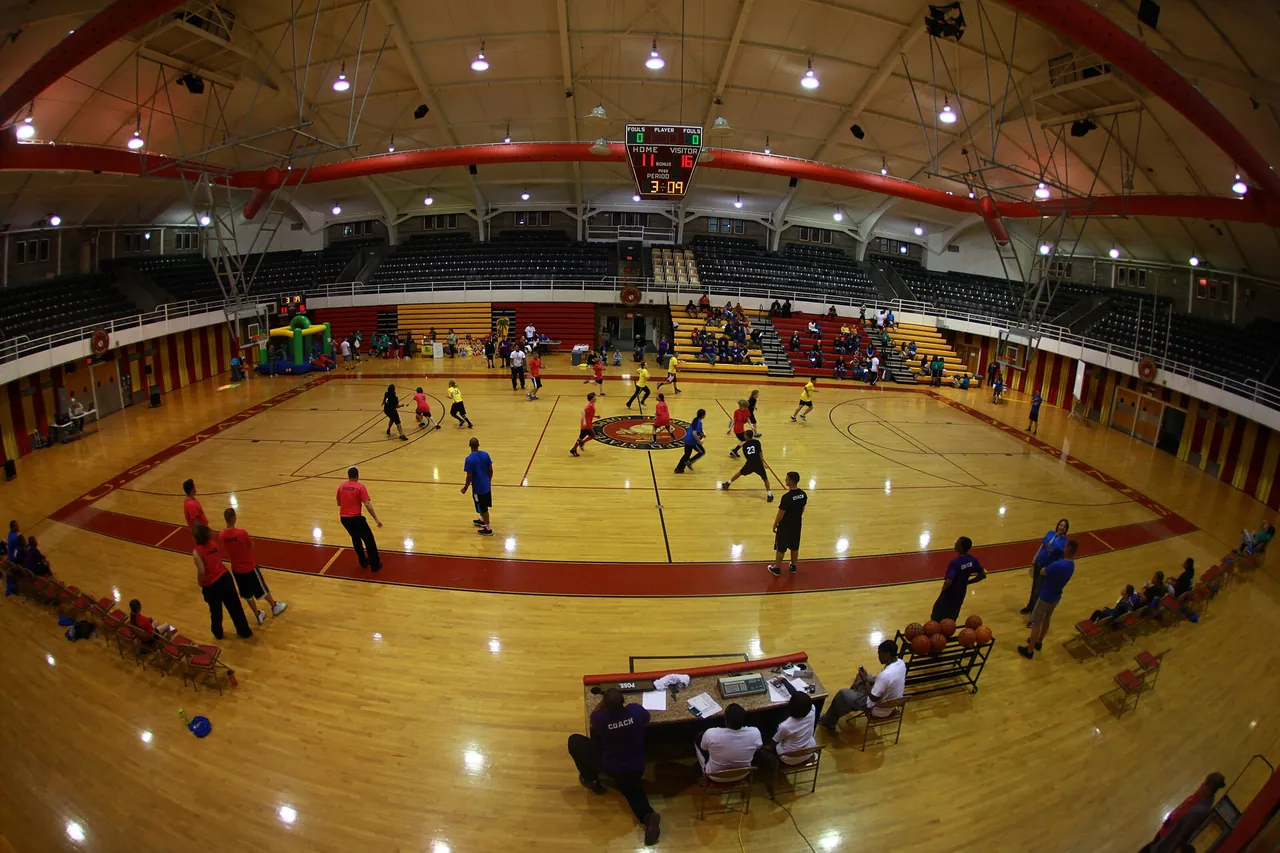
The Bay Area offers every college level. California community college basketball runs through the CCCAA's Coast and Bay Valley conferences. Division I includes Cal, Stanford, San Francisco, Santa Clara, Saint Mary's and San Jose State. Division II sits in the CCAA, Division III and NAIA options are nearby, and a junior college player can transfer up under a lower 2026 GPA rule.
This is Part 3 of a four-part series on Bay Area basketball. Part 1 maps middle school and high school leagues. Part 2 covers AAU and club basketball. Part 4 covers semi-pro, the G League, the NBA and the WNBA. This part covers every college level within driving distance of the Bay.
What are the California community college basketball options in the Bay Area?
Two conferences of the California Community College Athletic Association, or CCCAA, cover most of the Bay. The Coast Conference has 17 members, including Cabrillo, Cañada, Chabot, De Anza, Evergreen Valley, Foothill, Gavilan, Hartnell, Las Positas, Mission, Monterey Peninsula, Ohlone, City College of San Francisco, San Jose City, College of San Mateo, Skyline and West Valley, per Wikipedia.
The Bay Valley Conference is the other, and Solano's 2025-26 men's schedule included Mendocino, Yuba, College of Alameda, Contra Costa, Napa Valley, Marin, Los Medanos and Merritt, per Solano College. Conference membership shifts, so confirm it with the college.
Bay Area programs win at the state level. West Valley College won the 2024 men's state title, City College of San Francisco won in 2025, and Fullerton beat City College of San Francisco 67-64 in the 2026 final, per the CCCAA archive, CCCAA championship records and Fullerton College.
City College of San Francisco won its 15th straight Coast Conference title in 2026 at 27-1, per its athletics site. The 2026 state finals were played March 13 to 15 at College of the Sequoias in Visalia, per the CCCAA.
What do Peralta colleges basketball programs, Chabot and other Bay Area junior colleges offer?
The Peralta Community College District includes Berkeley City, Laney, Merritt and College of Alameda, per Wikipedia. Laney College basketball is the strongest recent record in the district: the women went 23-3 in the 2025-26 regular season, the best in the Bay Valley Conference, per the Peralta Citizen, then won a state quarterfinal 78-60 and lost the semifinal 71-62 to San Joaquin Delta, per the CCCAA.
Laney says seven players signed at four-year schools, the most of any California community college, per its athletics page.
Merritt College basketball reached the state semifinal in 2015, losing 94-83 to East Los Angeles College after a 25-7 season, per the Peralta Citizen.
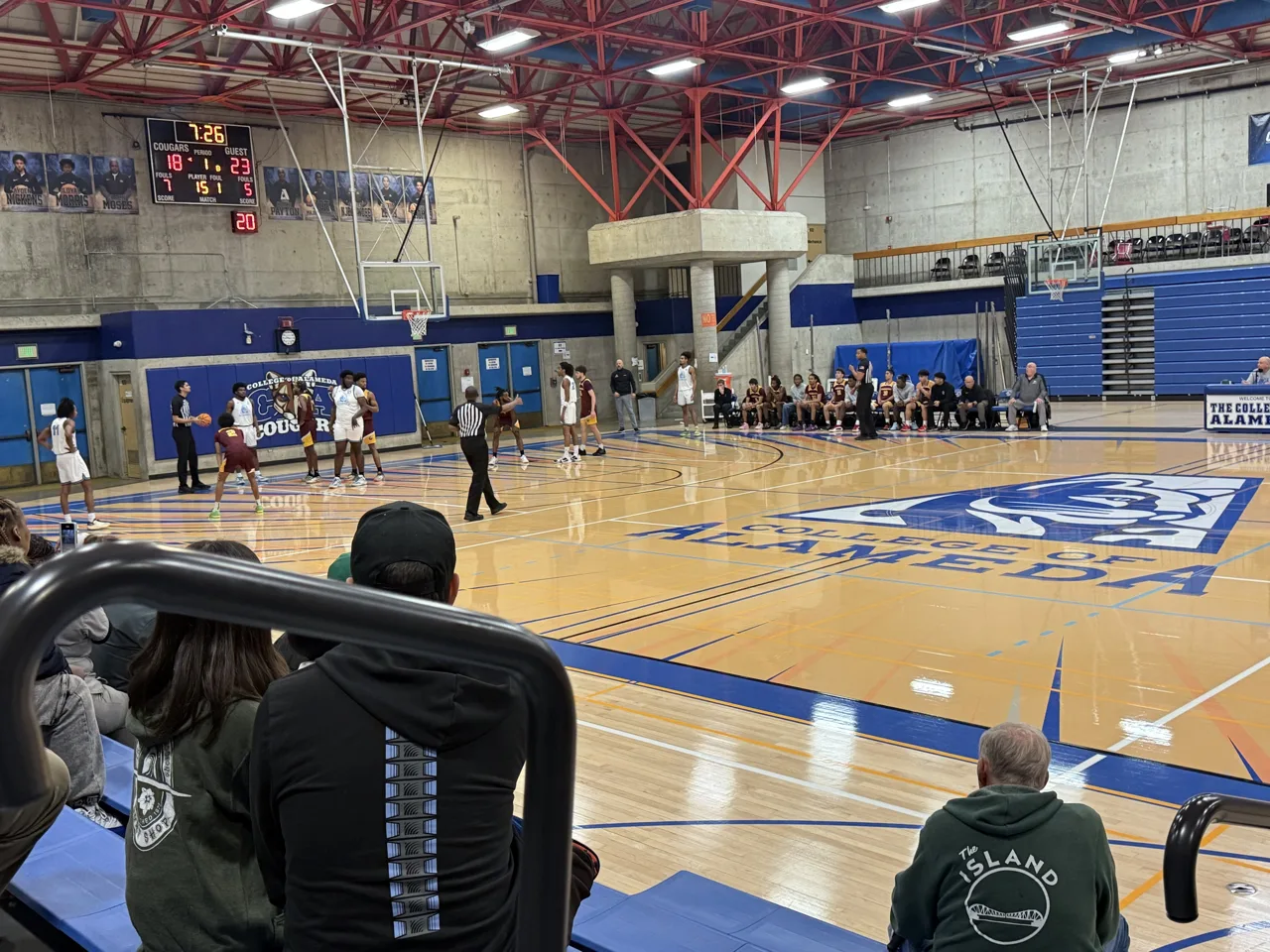
College of Alameda basketball named Hall of Famer Gary Payton its men's head coach in September 2024, per the Peralta district. The four Peralta colleges also ran free-tuition semesters through spring 2024, per The Oaklandside, so ask each college whether a similar program applies now.
Chabot College basketball in Hayward plays in the Coast Conference. Chabot's men beat City College of San Francisco 89-87 in February 2023, ending CCSF's 68-game conference winning streak, per Chabot Athletics, and went 18-10 in 2025-26, per its season release.
Elsewhere, Diablo Valley College's women won the 2019 state title, 68-61 over Moorpark, per DVC, and San Jose City College won men's and women's state titles in 1960 and 1998, per its history page.
What eligibility rules apply to a community college player?
A player must enroll in at least 12 units during the season, with at least 9 of them academic, and must complete and pass 24 semester units before a second season, per West Valley College and College of Marin.
Marin's page adds that 18 of those 24 units are academic and that the GPA must be at least 2.0. A player who transfers from another California community college must complete 12 units in residence before a second season, per the Marin page.
The path from junior college to Division I changed in 2026. NCAA Proposal 2026-40, adopted June 24, 2026, lowers the two-year transfer GPA for qualifiers from 2.500 to 2.000 and drops the 12-hours-per-term average, effective immediately for athletes seeking eligibility in 2026-27 and after, per the NCAA legislative database.
Core English, math and science requirements remain, and the page's summary leaves some provisions unclear, so a player should confirm the rule in writing with the Eligibility Center. The transfer portal rules guide covers the move once a player is on a roster.
Which Bay Area Division I basketball programs should players know?
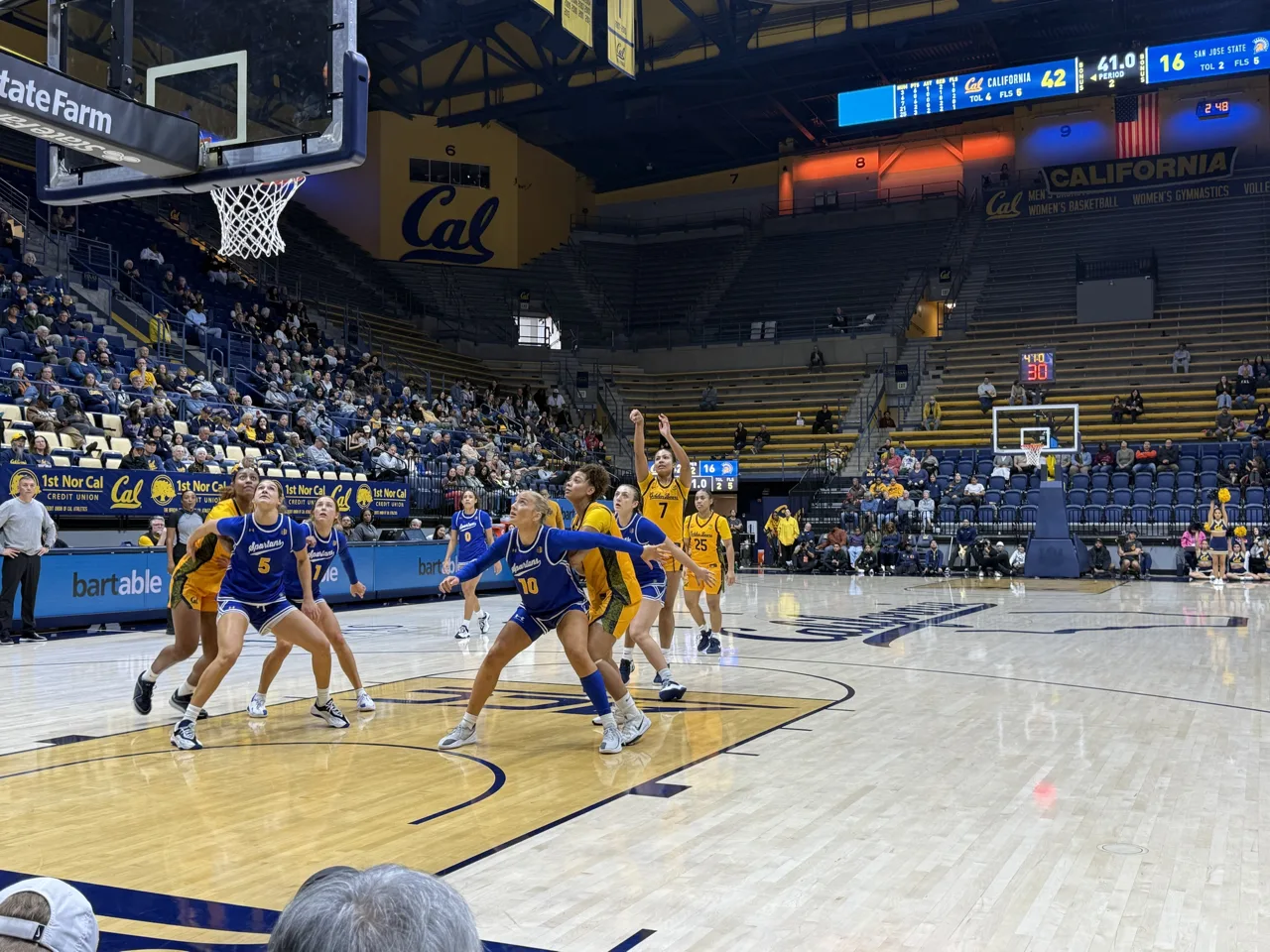
Six, across three conferences. The 2026-27 West Coast Conference field has ten teams, including San Francisco, Santa Clara and Saint Mary's, per Santa Clara Athletics. Cal and Stanford play in the Atlantic Coast Conference and San Jose State in the Mountain West.
| School | Arena (capacity) | Conference | Notable record |
|---|---|---|---|
| California (Cal Bears) | Haas Pavilion (11,877) | ACC | Men's national title in 1959 |
| Stanford | Maples Pavilion (7,233) | ACC | Men's title 1942; women's titles 1990, 1992, 2021 |
| San Francisco (Dons) | War Memorial at the Sobrato Center (3,100) | WCC | Men's titles 1955 and 1956 |
| Santa Clara | Leavey Center (4,200) | WCC | 2026 NCAA tournament, first since 1996 |
| Saint Mary's | University Credit Union Pavilion (about 3,500) | WCC | Fourth straight WCC title in 2026 |
| San Jose State | Provident Credit Union Event Center (5,000) | Mountain West | 2025 NIT, first since 1981 |
Capacities come from Cal, Stanford, Santa Clara, Saint Mary's and San Jose State, and the San Francisco figure comes from USF. The records come from the Cal and Stanford women's program pages on Wikipedia, plus Santa Clara, Saint Mary's and San Jose State. Stanford's men won in 1942 and the women's team in 1990, 1992 and 2021, per Wikipedia.
Each program has a story a family can use. Jason Kidd was a consensus first-team All-American at Cal in 1994, and Cal retired his No. 5 jersey in 2004, per Wikipedia. Bill Russell and K.C. Jones led University of San Francisco basketball to the 1955 and 1956 national titles, per Wikipedia.
Steve Nash played at Santa Clara from 1992 to 1996 and helped beat Arizona as a 15 seed in 1993, per Wikipedia. Patty Mills' No. 13 was retired at Saint Mary's in 2015, per Wikipedia. Cal runs boys' and girls' basketball camps through calsportscamps.com, per Cal Athletics.
Programs change coaches and conferences, so a family should read each school's staff page and recruiting questionnaire directly. A Division I roster is limited to 15 players in men's and women's basketball, a cap adopted June 6, 2025, per the NCAA, which the roster limit guide explains.
What Division II, Division III and NAIA options are near the Bay Area?
Division II is the deepest local layer. The California Collegiate Athletic Association, or CCAA, has 14 members for 2026-27, including Cal State East Bay in Hayward, San Francisco State, Cal State Monterey Bay, Stanislaus State, Chico State, Cal Poly Humboldt, UC Merced, Fresno Pacific and Menlo, per Wikipedia.
Fresno Pacific and Menlo joined July 1, 2026, per the CCAA, and Sonoma State returns for 2027-28 with men's and women's basketball, per the conference.
Cal State East Bay's men went 28-0 in the 2025-26 regular season and 22-0 in the CCAA, per the university. Dominican University of California in San Rafael plays in the Pacific West Conference, per the conference.
Division III and NAIA are thinner. UC Santa Cruz plays Division III at Kaiser Permanente Arena in Santa Cruz, per Wikipedia. The California Pacific Conference lists Pacific Union College in Angwin among its members, per the conference.
Several local programs have closed or ended varsity sports: Holy Names in Oakland announced in 2022 it would close after spring 2023, per Wikipedia, Notre Dame de Namur ended athletics after 2019-20, per the Pacific West Conference, and Cal Maritime said it would stop varsity athletics after the 2025-26 season, per the California Pacific Conference.
Scholarship rules differ by level. Division II basketball programs have 10.0 scholarship equivalencies they can split among players, per the NCAA, and Division III schools do not offer athletics scholarships, per the NCAA Division III page.
Agents notice that families often assume the level name tells them the quality of the program, when the roster, coach and fit tell far more. The guide to getting a basketball scholarship covers the money in detail.
How do the NCAA eligibility center, transfer windows and the age-based rule affect Bay Area players?
Three rules matter in 2026. The NCAA Eligibility Center certification account costs $120 for domestic registrants and $180 for international registrants, per the NCAA registration page. The Division I transfer window for basketball is 15 days beginning the day after the national championship game, per the NCAA, and in 2026 it ran April 6 to 20 for women and April 7 to 21 for men, per WYMT.
The third is the age-based model. The Division I Cabinet approved it on June 23, 2026. It gives up to five years of eligibility to athletes who enroll no later than the academic year after their 19th birthday, replacing season-of-competition, redshirt and extension rules, and it applies to athletes who first enroll full time in fall 2027 or later, per the NCAA.
Athletes entering in 2026-27 and current athletes may use whichever rule set is more favorable. The five-for-five eligibility guide explains the earlier rule, and the fifth-year eligibility guide covers the 2026 court rulings.
What does college basketball cost a Bay Area family, and who pays?
It depends on the level. California resident community college fees are $46 per unit for Fall 2026 and Spring 2027, subject to legislative change, per Los Rios Community College District. Stanford's 2026-27 undergraduate tuition is $67,731 and room and board is $22,944, for $90,675 before other costs, per Stanford News.
Athletic aid fills part of the gap at Division I and II, and the House settlement added revenue sharing at Division I schools that opted in, which the guide to comparing college offers walks through.
A Division I scholarship is typically year-to-year, and a school must give written notice by July 1 of any reduction or non-renewal, per the NCAA.
What should Bay Area players do next?
- Pick a target level for the first two years, not only the dream level. A community college year can be a strategy rather than a fallback.
- Email coaches at every level in range with game film, a transcript summary and the next three dates to watch.
- Register with the NCAA Eligibility Center early, and confirm junior college transfer rules in writing.
- Compare cost and scholarship terms across at least three offers, using the offer comparison guide.
- Read Part 4 for what comes after college, including the Bay Area's semi-pro, G League and WNBA routes.
Sources
- Wikipedia: Coast Conference
- Wikipedia: Peralta Community College District
- Peralta Citizen: Laney basketball extends winning streak
- CCCAA: Laney women, state semifinal (2026)
- Laney College Athletics: Women’s basketball
- Peralta Citizen: Merritt basketball (2015)
- Peralta district: Gary Payton joins College of Alameda
- The Oaklandside: Peralta free tuition
- Chabot Athletics: Men’s basketball beats City College of San Francisco (2023)
- Chabot Athletics: Men’s basketball all-conference (2026)
- Diablo Valley College: Women’s basketball state champions
- San Jose City College: 100-year history
- USF Athletics: War Memorial at the Sobrato Center
- Wikipedia: Santa Clara Broncos men’s basketball
- Wikipedia: Saint Mary’s Gaels men’s basketball
- Cal Athletics: Basketball camps
- Solano College: 2025-26 men’s basketball schedule
- CCCAA: Men’s basketball archive 2023-24
- CCCAA stats: Men’s basketball championships
- Fullerton College: 2026 state championship release
- City College of San Francisco Athletics: 15th straight Coast Conference title
- CCCAA: 2026 basketball state finals
- West Valley College Athletics: Eligibility
- College of Marin Athletics: Eligibility information
- NCAA legislative database: Proposal 2026-40
- Santa Clara Athletics: WCC preseason poll
- Cal Athletics: Haas Pavilion
- Stanford Athletics: Maples Pavilion
- Santa Clara Athletics: Leavey Center
- Saint Mary’s Athletics: University Credit Union Pavilion
- San Jose State Athletics: Provident Credit Union Event Center
- Wikipedia: San Francisco Dons men’s basketball
- Wikipedia: California Golden Bears men’s basketball
- Wikipedia: Stanford Cardinal women’s basketball
- Wikipedia: Stanford Cardinal men’s basketball
- Santa Clara Athletics: NCAA tournament berth (2026)
- Saint Mary’s Athletics: Thanks to Randy Bennett (2026)
- San Jose State Athletics: NIT bid (2025)
- NCAA legislative database: Division I basketball roster limits
- Wikipedia: California Collegiate Athletic Association
- CCAA: Fresno Pacific and Menlo join the CCAA
- CCAA: Sonoma State rejoins the CCAA
- Cal State East Bay: Perfect regular season for men’s basketball
- Pacific West Conference: Dominican men’s basketball
- Wikipedia: UC Santa Cruz Banana Slugs
- California Pacific Conference: About
- Wikipedia: Holy Names University
- Pacific West Conference: NDNU discontinues athletics
- California Pacific Conference: Cal Maritime release (2026)
- NCAA: Division II athletics scholarships
- NCAA: Division III initial eligibility requirements
- NCAA Eligibility Center: Certification registration
- NCAA: Division I adopts new transfer windows
- WYMT: NCAA announces changes to college basketball transfer process
- NCAA: Division I adopts age-based eligibility model
- Los Rios Community College District: Tuition and fees
- Stanford News: Undergraduate tuition rates 2026-27
- NCAA: Scholarships and financial aid
Data current as of October 24, 2026. Figures are linked where each one appears. Leagues and regulators update these rules; check the source before relying on a number.
Related questions