
What is a guaranteed basketball contract, and what happens to the money if a player is cut or hurt?
Short answer
A guaranteed basketball contract is one where the team must keep paying even if it cuts the player. The NBA CBA calls this compensation protection and sets it by category, such as lack of skill or injury, and by season. Unprotected money for later seasons generally ends on a waiver. Protected money is owed, though it may be spread out or offset.
This guide reads the operative text of the 2023 NBA collective bargaining agreement and the 2026 WNBA collective bargaining agreement. It is information, not legal or financial advice. How waivers work in a roster deadline week is in the roster deadline post, and this guide does not repeat it.
What is a guaranteed contract in the NBA?
A guaranteed contract is one where part or all of the pay is protected, so the team owes it even after it terminates the player. The NBA CBA does not use the word guaranteed for this. It calls it compensation protection, and the protected amount is set in Exhibit 2, per Article II, Section 3(i). Protection is set by category: lack of skill, death, injury and mental disability, per the same section.
That makes a guarantee a set of separate promises, not one yes or no. A contract can protect only one of the two injury categories, either basketball-related injury or any injury or illness, per Article II, Section 3(i)(iii). Every category carries standard exclusions, including prohibited activities, self-inflicted injury, certain substance violations and felony conduct, per Article II, Section 4.
The contract does not give a player a roster spot either, per Section 4(f). It only keeps the money owed.
What are non-guaranteed and partially guaranteed contracts?
A non-guaranteed contract is a one-season minimum-salary or two-way deal that carries Exhibit 9, which removes the player’s right to base compensation if he is terminated before the first day of the regular season, other than training-camp pay under paragraph 3(b) and any Exhibit 10 amount, per Article II, Section 3(r) and Exhibit 9. A team must have at least 14 players on Player Contracts, not counting two-way and non-guaranteed training camp contracts, when it signs one, and it can hold no more than six at a time, per Section 3(r).
A partially guaranteed contract protects part of the pay. Exhibit 2 states the type and amount of protection season by season, per Article II, Section 3(i). The protected percentage in a later season cannot be higher than in an earlier one, unless the increase depends on something that cannot happen until the earlier season is over, per Section 4(i).
A partially guaranteed contract therefore states its protection season by season. Beyond the standard conditions, the CBA lets a team and player add conditions on only four subjects: whether the team waives the player by a certain time, performance or physical benchmarks, a particular injury or condition, and the team’s ability to obtain insurance, per Section 4(l).
When does a contract become guaranteed?
The CBA sets one league-wide guarantee date for the current season. A player terminated for lack of skill from January 10 through the end of the season is owed his full base compensation for that season, per paragraph 16(a)(iii)(B) of the Uniform Player Contract in Exhibit A. That date protects the current season only. It does not protect future seasons by itself.
Other dates live in the individual contract. The CBA allows protection that increases if the team does not request waivers by a certain date, per Article II, Section 4(l), but it does not list those dates. No league release or CBA text reviewed for this guide lists the early guarantee dates for any 2026-27 contract.
An Exhibit 10 contract that is not terminated before the first day of the regular season is protected for lack of skill and injury or illness at the conversion protection amount, which Article II, Section 3(s)(ii) sets between $5,000 and the maximum Exhibit 10 bonus amount ($75,000 for 2023-24, adjusted with the salary cap). The basics of that path are in the Exhibit 10 contract guide and the two-way contract guide.
What happens to a waived player’s salary in the NBA, and what is the stretch provision?
Beyond the Uniform Player Contract’s own termination rules, only the protected part is owed. For contracts signed or extended on or after the 2023 CBA took effect, protected money still owed after a waiver is paid under what Exhibit 2 calls the automatic stretch provision, in Article II, Section 4(k). If the total owed is $500,000 or less, it is paid on the normal schedule. If it is more, the current season keeps its schedule and the rest is paid in equal yearly amounts over twice the remaining seasons plus one, per Section 4(k)(ii).
The CBA gives its own example. A player has four seasons left with protected pay of $4 million, $4.3 million, $4.7 million and $5 million. If he is waived on December 1 of the first season, the remainder of the first year follows the normal schedule, and the $14 million for the three later seasons is paid at $2 million a year over seven seasons, per Section 4(k).
That is the player’s pay. The CBA also calls the team’s cap election a stretch, in Article VII, Section 7(d)(6): a team may spread a waived player’s cap charge over twice the remaining seasons plus one, but the termination and the election must both come before the September 1 preceding the final season, and the election cannot push waived-player charges above 15 percent of the salary cap.
What a waived player earns elsewhere reduces what the first team owes. The reduction is 50 percent of the player’s earnings from other professional teams in a season above a minimum-salary floor that depends on his years of service, per Article XXVII, Section 1(a). A team is not required to enforce the right against pay from a non-NBA team, per the same section.
How does injury protection work in a basketball contract?
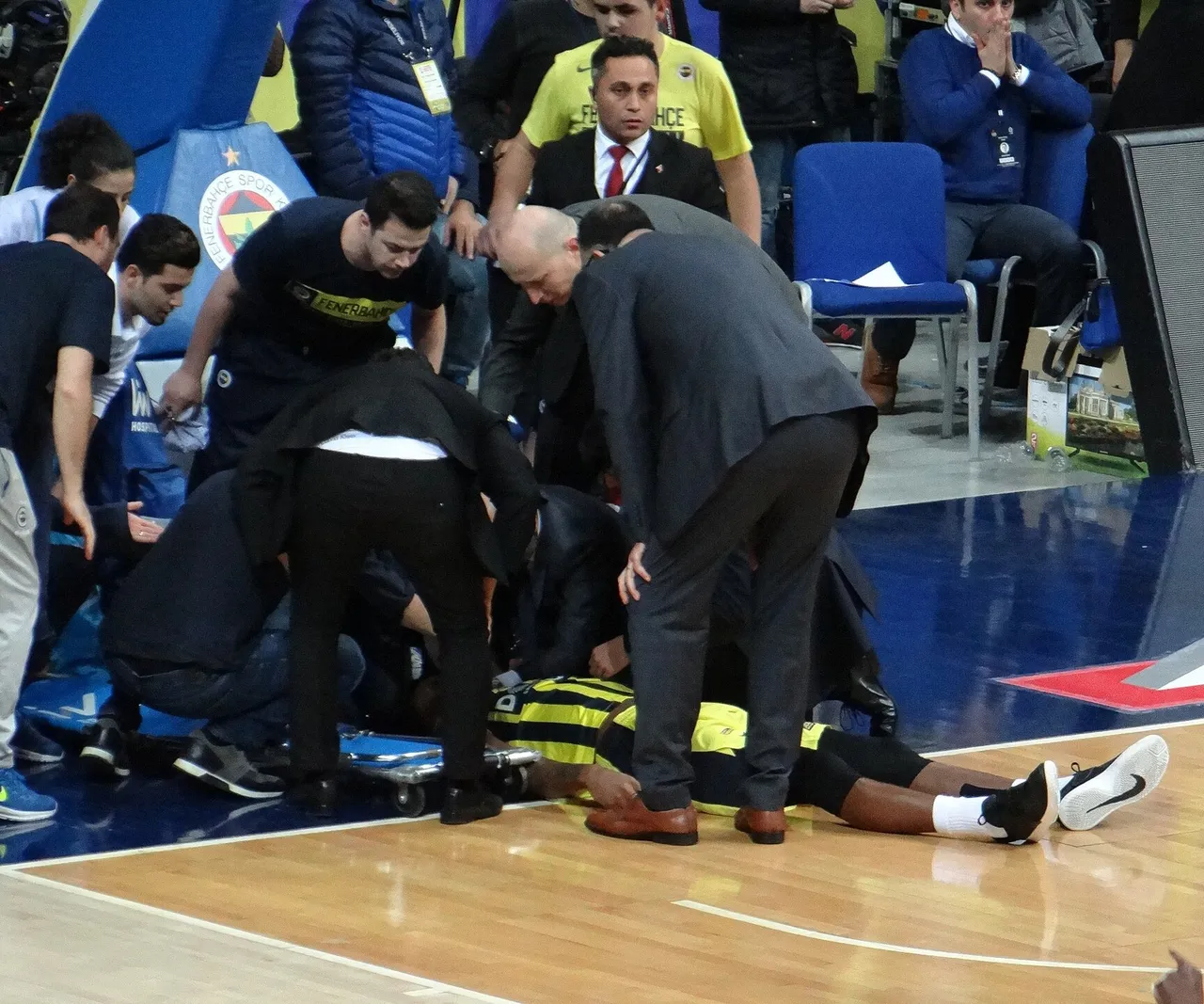
It depends on when and how the player is hurt. If the team terminates a player before January 10 for lack of skill while he is unfit from an injury that came directly from playing for the team, he keeps receiving full base compensation, less workers’ compensation and team-provided insurance payments and subject to Exhibit 3, until he is fit but not beyond the season, per paragraph 16(a)(iii)(A) of the Uniform Player Contract. If the team terminates him from January 10 on, the full-season rule applies, per paragraph 16(a)(iii)(B).
A different rule applies to an injury or condition from a preceding season, or from after that season but before the player took part in any practice or game for the team. If the team terminates him before the first regular-season game over that injury, the training-camp pay earned, board, lodging and expense allowance, and travel home are full payment, per paragraph 16(c). A contract can also limit or eliminate pay for re-injury of a described prior injury, or aggravation of a prior condition, through Exhibit 3, per Article II, Section 3(j). Exhibit 3 does not apply to a termination from February 1 through the end of that season.
On an Exhibit 9 deal, the team’s sole liability to a player hurt playing for it is $15,000, apart from paragraph 3(b) training-camp pay and any Exhibit 10 amount, per Exhibit 9. Minimum-salary and rookie scale contracts can carry Exhibit 2 protection like other contracts, and a minimum-salary deal can also be an Exhibit 9 deal. Their pay scales are in the minimum salary guide and the rookie scale guide.
Agents notice that the protected amount, the injury category and any date conditions sit under the salary figure, per Article II, Sections 3(i) and 4(l).
What is a WNBA guaranteed contract, and is every WNBA contract guaranteed?
For veterans, WNBA base salary protection exists where Exhibit 2 provides it, per Article V, Section 3(b) of the CBA. Rookie scale contracts carry protection set by Section 4(e), and separate termination rules in Section 6 can keep pay running without Exhibit 2. A team can be party to no more than seven contracts with protection of any kind at once, per the same section. Outstanding offer sheets with protection count toward the limit, and rookie scale contracts do not count during their four seasons.
Rookie protection is tiered by draft pick. A first-round lottery pick is fully protected in the first season, and second and third-round picks get no protection in the first season, per Article V, Section 4(e). Other first-round picks become fully protected for the first season if waivers are not requested before the first day of the regular season.
Training camp, rest-of-season, replacement and development contracts cannot carry base salary protection, per Article VII, Section 2(g) and Article V, Sections 10 through 12. A seven-day contract’s early-termination pay is limited to the sums in its Exhibit 1, per Section 9. A regular contract terminated for lack of skill after the mid-point of the regular season keeps the remainder of that season’s salary, subject to Article XXXIII, Section 3(b), per Article V, Section 6(a)(i)(x).
It works like the NBA’s January 10 date. The text reviewed contains no stretch provision. The league’s pay scale is in the WNBA salaries guide.
What does an overseas contract guarantee?
An overseas contract guarantees whatever the individual contract says. FIBA’s Internal Regulations Book 3 contains no definition of a guarantee for club pay. Its Appendix 2 is a checklist of points for the parties to settle, including payment dates, instalments, taxes and insurance, and early termination only for important reasons, per Appendix 2, page 67.
Disputes can go to the Basketball Arbitral Tribunal, but only if the parties agreed in writing to submit them to it, per Article 3-332. If a participant fails to honour a final decision of the tribunal or the Court of Arbitration for Sport, the other party can ask FIBA to impose sanctions, including a fine of up to CHF 150,000, per Article 3-343. Appendix 2 lists payment dates, early termination and dispute resolution among its suggested points, and Article 3-335 recommends an arbitration clause for parties who want disputes to go to the tribunal. The clauses are covered in the overseas contracts guide.
Sources
- 2023 NBA Collective Bargaining Agreement
- 2026 WNBA-WNBPA Collective Bargaining Agreement
- FIBA Internal Regulations Book 3
Data current as of October 23, 2026. Figures are linked where each one appears. Leagues and regulators update these rules; check the source before relying on a number.
Related questions