

← Back to the libraryYouth and Recruiting
What should Bay Area parents expect at each age in youth basketball?
Short answer
A normal youth basketball week is one 20 to 28 minute game and one 30 to 60 minute practice at ages 7 and 8, rising to two to three games and three to four 90 to 120 minute practices in grades 9 to 12, per the NBA and USA Basketball guidelines. Players should delay single-sport specialization until at least 14.
This article is about what a normal week should look like, not who runs each league. For the governing bodies and CIF eligibility rules, read who runs Bay Area youth basketball. For the weekly ceilings and rest rules, read how much basketball is too much for a young player.
What does a normal youth basketball week look like by age?
The NBA and USA Basketball youth guidelines give a recommended week for each age band, per the guidelines site.
| Age | Game length | Games a week | Practice length | Practices a week |
|---|---|---|---|---|
| 7 to 8 | 20 to 28 min | 1 | 30 to 60 min | 1 |
| 9 to 11 | 24 to 32 min | 1 to 2 | 45 to 75 min | 2 |
| 12 to 14 | 28 to 32 min | 2 | 60 to 90 min | 2 to 4 |
| Grades 9 to 12 | 32 to 40 min | 2 to 3 | 90 to 120 min | 3 to 4 |
A parent can use this table as a quick test. A program that asks for much more than the row for a child's age is asking for more than the guidelines recommend.
What fits ages 6 to 8?
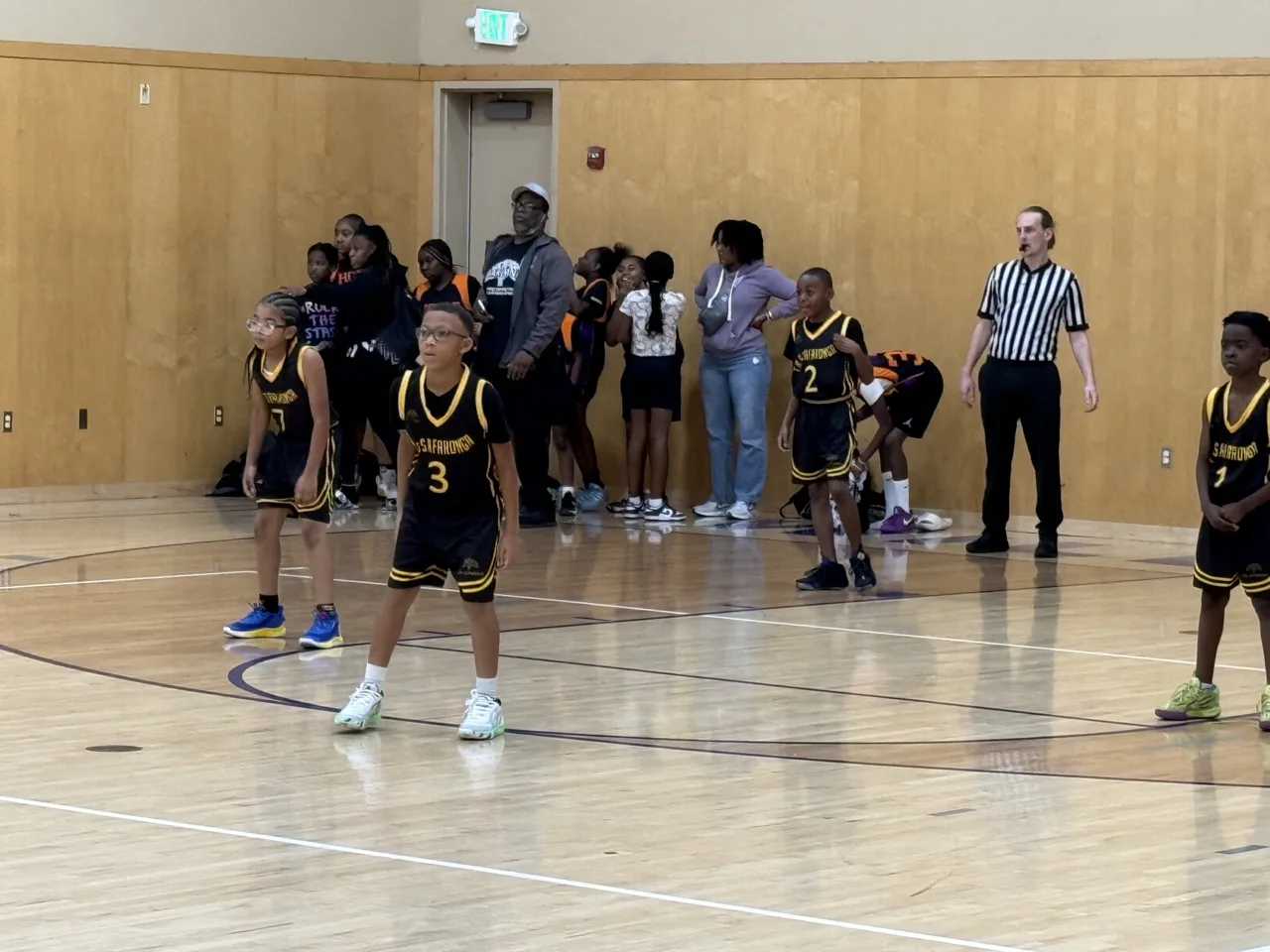
One short game and one practice a week, with two rest days. The Jr. NBA describes its participation program for boys and girls as ages 6 to 14, per its guidelines announcement. At ages 7 and 8 the guidelines call for games of 20 to 28 minutes and practices of 30 to 60 minutes. The ceiling is 3 hours of organized basketball a week and 4 months a year.
In the Bay Area this stage usually means a city recreation league or a school after-school program. Fundamentals and fun matter more than a schedule at this age, and a second team adds hours the child does not need.
What fits ages 9 to 11?
One or two games and two practices a week of 45 to 75 minutes, per the guidelines site. The ceiling is 5 hours a week and 5 months a year, with two rest days.
This is when many families first hear about club teams. The AAU cost guide lays out what travel teams cost, and the Bay Area club and AAU guide covers how the local clubs and circuits work. A child at this age who plays one club team plus a rec team is already near the 5-hour ceiling.
What fits ages 12 to 14?
Two games a week of 28 to 32 minutes and two to four practices of 60 to 90 minutes, with a ceiling of 10 hours a week and 7 months a year, per the guidelines site. The site also treats 14U and 8th grade as a transition year.
This is the age to hold off on single-sport specialization. The guidelines discourage it before 14 and note that top athletes in basketball and similar team sports often delayed it until 16 or later. Middle school teams and club teams both appear here, and a family should add their hours before saying yes to a second team.
What fits grades 9 to 12, and which Bay Area leagues follow?
Two to three games a week of 32 to 40 minutes and three to four practices of 90 to 120 minutes, per the guidelines site. The ceiling is 14 hours a week and 9 to 10 months a year. High school brings league play, and the league depends on the school.
The 2024-25 Mission Valley League boys standings list Mission San Jose, Kennedy, Washington, Irvington, Newark Memorial, James Logan and American, plus Moreau Catholic of Hayward, per MaxPreps.
The West Alameda County Conference lists Berkeley High, Castro Valley, Alameda, Encinal, Hayward High, Mt. Eden, San Lorenzo and Bishop O'Dowd among its members, per the conference site.
In the Richmond area, the Tri-County Athletic League lists Richmond High, El Cerrito, Salesian College Prep and St. Mary's College High, per the league. League names and members change, so confirm with the school's athletic director.
Part 1 of the Bay Area series maps the other Bay Area leagues, and the transfer rules guide explains what happens when a player changes schools.
What should a parent ask a program at any age?
- How many games and practices will my child have in a normal week?
- How long is each practice and each game?
- How many months a year does the program run?
- What are the rest days, and how are tournaments scheduled?
- Does the program expect my child to play only basketball?
Agents notice that the programs that answer these questions plainly are usually the ones that also hand over a schedule in writing. Ask before paying a deposit.
Sources
- NBA and USA Basketball: Youth Basketball Guidelines
- Jr. NBA: NBA, USA Basketball announce youth basketball guidelines
- MaxPreps: Mission Valley League, 2024-25 boys basketball standings
- West Alameda County Conference: member schools
- Tri-County Athletic League: member schools
Data current as of October 24, 2026. Figures are linked where each one appears. Leagues and regulators update these rules; check the source before relying on a number.
Related questions
Who runs youth basketball in the Bay Area, and which rules apply?
October 17, 2026
Youth and RecruitingHow much basketball is too much for a young Bay Area player?
October 24, 2026
Youth and RecruitingHow can a young player improve their game from middle school through high school?
September 27, 2026