

Porziņģis Steps Away From Basketball: What It Does to the Warriors' Cap Space
The short version
Kristaps Porziņģis announced on November 6 that he is stepping away from basketball, but he has not formally retired. The Warriors have stopped paying him, yet the CBA, not the paychecks, decides what counts on their cap. A trade, buyout, void or medical exclusion would clear his $20 million, and none is immediate.
This post covers only the business mechanics: what his $20 million does to the Warriors' payroll, which tools can remove it, and when each could work. It takes no position on the decision itself. For the underlying rules, see how the NBA salary cap works.
What did Porziņģis announce, and is it a retirement?
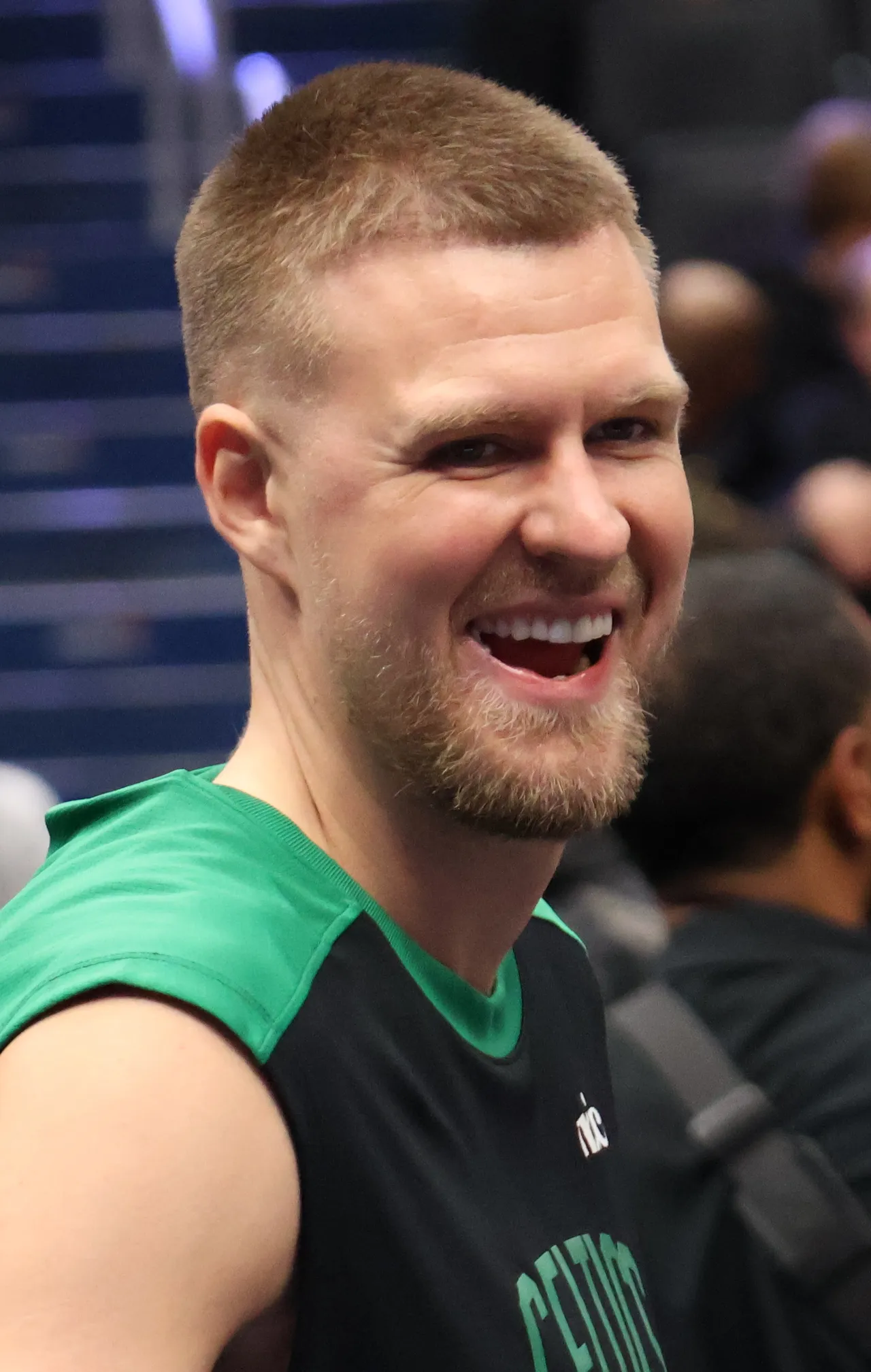
He said on social media that he is stepping away from basketball, and TSN reported the move is not an official retirement. TSN also reports he wants to work with the Warriors to find a solution, and the San Francisco Standard says he is expected to remain trade-eligible. Per ABC7, he re-signed this summer on a two-year, $40 million extension with only $3 million of the $20 million second-season salary guaranteed. That makes $23 million guaranteed in total: $20 million this season and $3 million in 2027-28. ABC7, citing ESPN, also reports the Warriors are withholding his pay on the grounds that he is not providing services.
Where do the Warriors sit against the tax line and the aprons?
The 2026-27 thresholds, per Hoops Rumors, are a $164.961 million cap, a $200.428 million tax line, a $209.015 million first apron and a $221.686 million second apron. The San Francisco Standard reports the Warriors are $20.4 million over the tax line and roughly $300,000 below the second apron. Those two gaps do not add up exactly to the distance between the lines, so treat both as approximate until official figures post.
The result is a roster with almost no room. A team near the second apron cannot take back more salary than it sends out in a trade, per the same report. Remove a $20 million salary and ABC7 says the team would erase nearly all of its tax bill and drop below the first apron, though it would then only be able to add a minimum-salary player in free agency. The cost of carrying the number is therefore both tax dollars and flexibility. See what each apron blocks for the restrictions.
Does his salary still count if the Warriors stop paying him?
This is the open question. The CBA's Team Salary definition, in Article VII, Section 4(a)(1)(ii), includes "any amount called for in a retired player's Player Contract paid or to be paid to the player," allocated pro rata over the remaining cap years when the team continues to pay. That text is written around a team that keeps paying. Here the reporting says the team has stopped. The San Francisco Standard states that if a player retires under contract, the contract still counts against the team's cap. No source reviewed addresses withheld pay specifically, but the San Francisco Standard says a retired player's contract still counts against the team's cap, and TSN says the Warriors can still use the salary in a trade. The safe reading is that the $20 million stays on the sheet until a transaction or ruling removes it.

What are the ways to clear the $20 million, and what does each cost?
- Trade. He has been trade-eligible since July, per the San Francisco Standard, which also reports, citing The Athletic, that the Warriors reached out to the Bucks, and that only teams with no real aspirations this season are likely to consider him before Christmas. Because only $3 million of next year's money is guaranteed, ABC7 notes a partner could value the expiring deal. The deal must be salary-neutral or smaller coming back. The 2027 trade deadline is February 11, per Yardbarker.
- Buyout. It needs his agreement and new terms. If he returned a large share of the salary, ABC7 says the contract would become more attractive to a trade partner, and the San Francisco Standard says it could pull the Warriors under the first apron. His incentive is the $23 million guarantee, though TSN reports he is expected to be open to a buyout after a trade.
- Void for failure to render services. ABC7 reports this theory has been raised, and the San Francisco Standard quotes a team source saying it is not being considered now. ABC7 says it would bring complications unless he retires and willingly gives the money back.
- Waive. The team would still owe the guaranteed money, and the San Francisco Standard reports waive-and-stretch is unavailable in season because the August 31 deadline has passed.
I built the Agent Scorecard for readers in this spot. 15 checks and a scoring sheet for vetting an agent.
When could medical cap relief arrive?
The CBA's career-ending injury exclusion is Article VII, Section 4(h). Four conditions matter, all from the 2023 CBA:
- The team must first terminate the contract through the waiver process.
- A physician chosen jointly by the NBA and the players' union, or a Fitness-to-Play Panel, must find a career-ending injury or illness.
- The application cannot come before the first anniversary of his last game, reported as April 15 by the San Francisco Standard (a different timing rule applies if a player appeared in fewer than ten games in his last season), and a separate clause also bars it before the first anniversary of the first regular-season game he is on the roster under the contract in question. How that clause reads for a June 2026 extension is a question for the league.
- If the application is granted, the team can never re-sign or re-acquire him, and a disabled player exception request for the same year blocks the exclusion for that year.
The practical takeaway is timing. Even on the earliest reading, relief arrives only after the regular season ends, so it would mostly address the 2027-28 money. The disabled player exception has its own January 15 application date, and the San Francisco Standard reports the Warriors likely cannot use it. For this season, the trade market and a negotiated buyout are the only tools the sources describe as live.
Sources
- TSN: Warriors Porzingis to step away, prioritize health
- San Francisco Standard: Can the Warriors trade, cut or stop paying Porzingis?
- ABC7: What are the Warriors' options as Porzingis remains away
- Hoops Rumors: 2026-27 salary cap and tax line
- Yardbarker: 2027 NBA trade deadline set for February 11
- 2023 NBA Collective Bargaining Agreement, Article VII
Data current as of November 6, 2026. Figures are linked where each one appears. Leagues and regulators update these rules; check the source before relying on a number.
Go deeper in the library